I possessed not a drop of scoring hubris playing on what became an exceptional high school basketball team my junior year. Instead, I sought anonymity in rebounding and blocking shots. However, I carried out the two tasks with a ferocious, personal determination, as if I had to prove something, as if my life depended on it.
I’d rip down rebounds, occasionally catching an opponent with the slash of a super-quick elbow or make a monstrous block shot, the shooter’s mouth wide open for an instant in shocked surprise before the rejected ball smashed into his face. I simply ruled under the basket.
Another thing was also for certain—I did not want to be the one standing at the foul line or taking the last shot of the game that decided the outcome. Just the thought of public failure made me sick to my stomach.
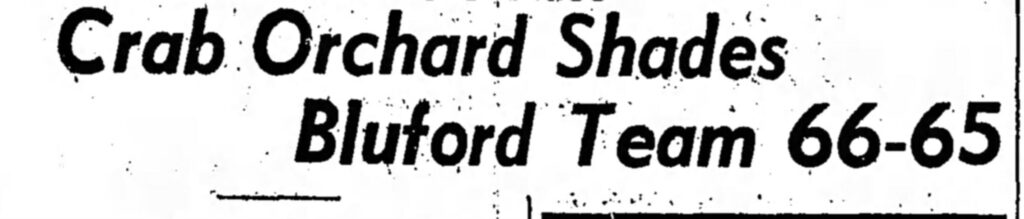
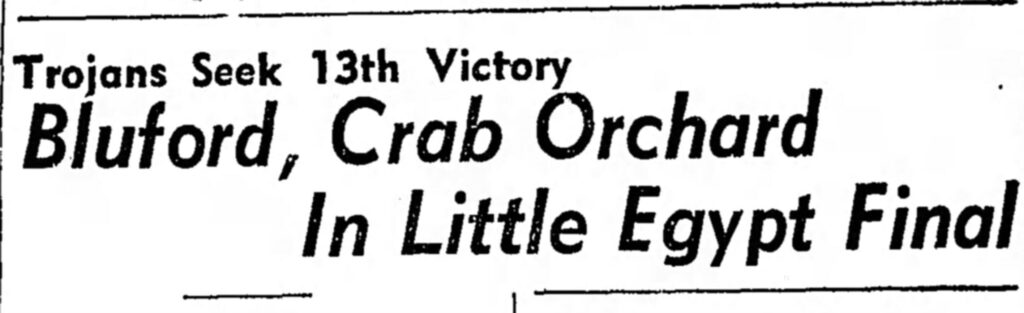
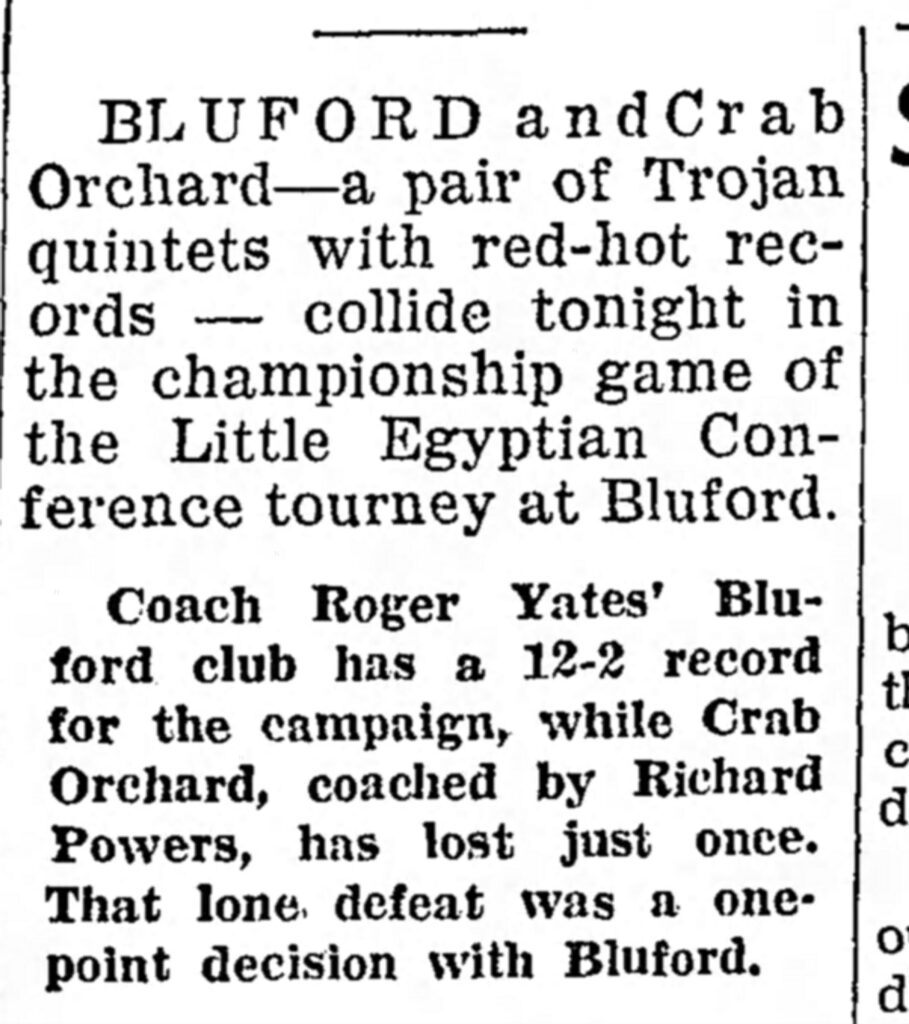
That year’s conference tournament took place in January at the Bluford gymnasium, and the gym was packed with large crowds of noisy excited fans, each team and their fans hungry for that year’s Little Egyptian Conference tournament title, an accomplishment that had eluded our school for over a decade.
Just before the event took place, I was on cloud nine. The year before was my first year to start varsity but we had only won a single game in the regular season. At the beginning of my junior year season, however, we won eleven games in a row. The team, our coach, our fans and most sportswriters thought we would take the conference tourney.
Bluford made quick work of our first two opponents, easily beating a tough Thompsonville squad in the semi-final round. Bluford’s Ed Donoho grabbed thirty points in the win. Meanwhile, Crab Orchard High School was demolishing teams in their bracket.
Crab Orchard was a long-established small school powerhouse in southern Illinois basketball, wining the regular conference title year after year. In my junior season Crab Orchard had an incredible shooting guard, a senior named Corum Turner. We had defeated them on a last-minute basket earlier than season and I had sixteen points in that game. Ed Case, however, hit the winning shot for Bluford.
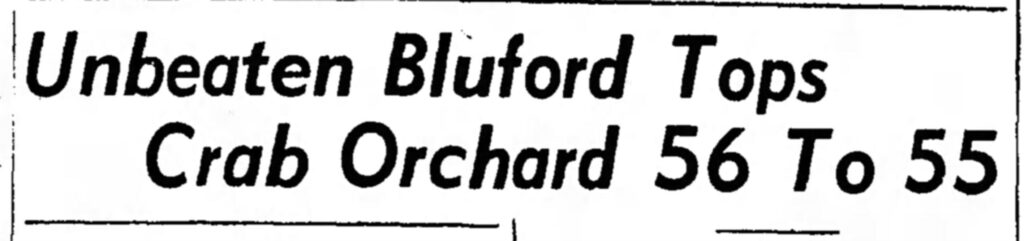
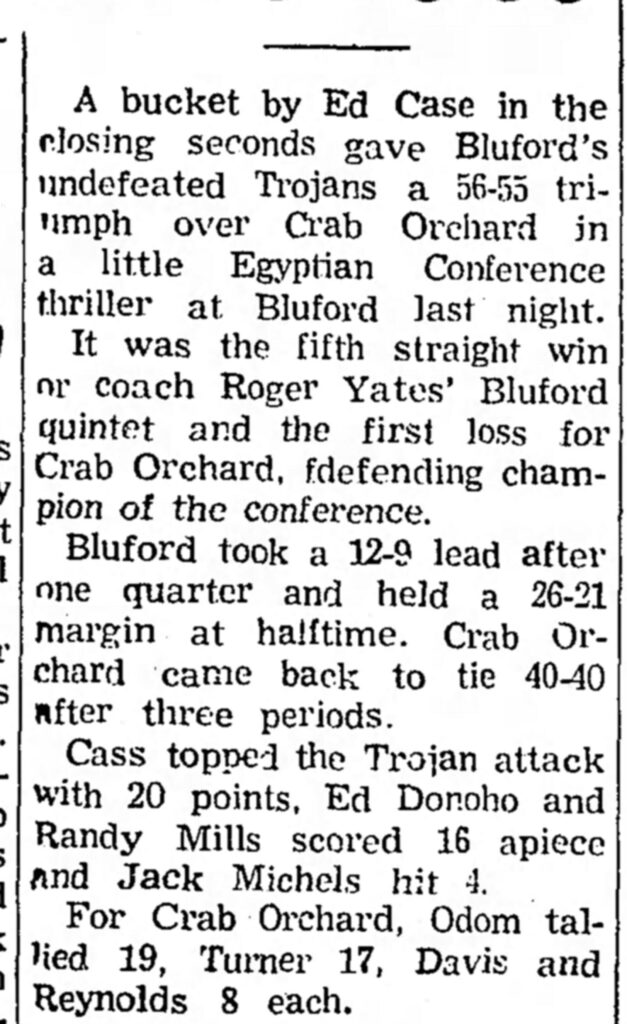
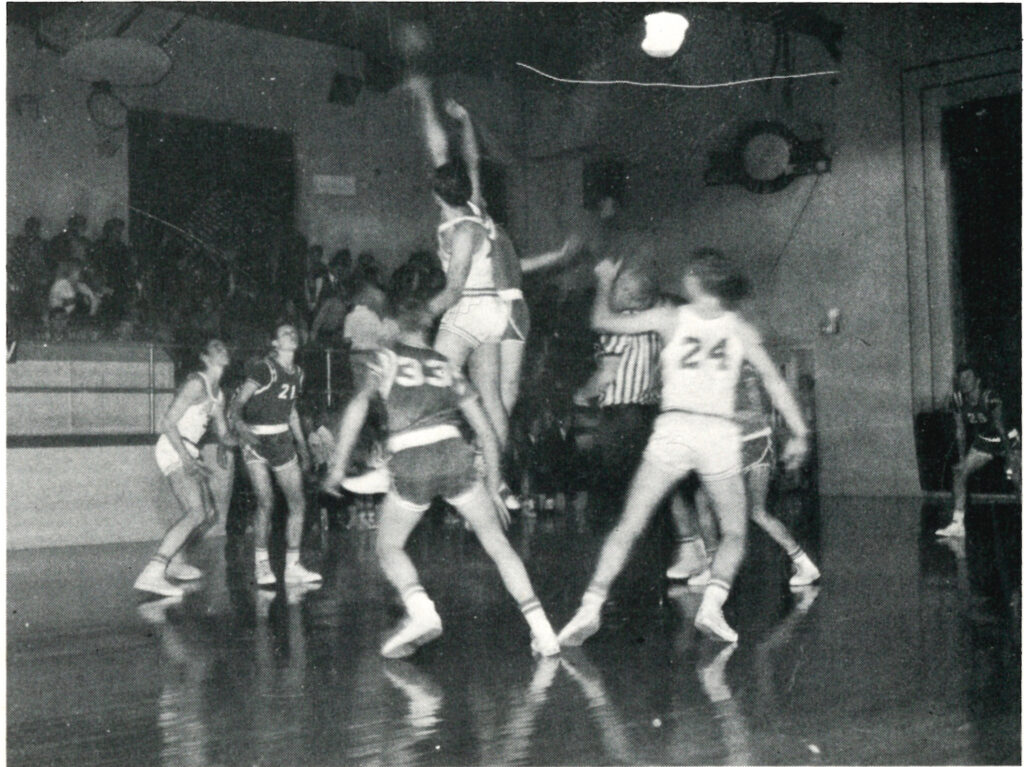
I am not typically superstitious, but it did occur to me that we were after victory number thirteen when we faced Crab Orchard. Then my teammates and I came up out of the locker room and on to the floor. I saw that the Bluford gym was overflowing with cheering fans. I got the opening tip and we quickly scored, our fans rising to their feet.
Early in the first quarter, I made a move that seemed to decisively change the direction of the game. Coming down with a rebound, I felt the feisty Turner on my back and gave him a quick elbow. I had this motion down to an art, moving with such swiftness that I was never called for a flagrant foul. Rarely was anyone injured but it did make opponents more careful when they tried to take a rebound underneath the basket.
Turner, however, went down, both hands covering his face.
The referees called an immediate time out and helped the Crab Orchard player to the dressing room. Turner came back about ten minutes later, wobble-legged, having to be helped to the Crab Orchard bench, his left eye all but swollen shut, his right eye shooting daggers. Meanwhile, in Turner’s absence, we had built what surely was an insurmountable lead.
Five minutes away from the end of the game, the gym suddenly rocked with a roar from the Crab Orchard fan section. I turned to see Corum Turner kneeling in front of the scorers’ table, getting ready to check back into the game.
Swollen eye and all, Corum Turner could not miss. Coming off picks, he pumped in long shots from every angle or slashed through our frantic defense to score impossible lay ups.
What had been a fifteen-point lead all but melted away, like the last dirty stubborn little snow pile in the spring. One of Turner’s baskets put his team ahead.
While all was desperate motion on the playing floor, the score clock slowly, so very slowly, wound down. It was as if Karma had slipped into the gym, calmly moving among the screaming, jumping, frantic fans, an eastern world version of Santa Claus, thoughtfully stroking its chin, seeing who’d been naughty or nice.
Ed Case made a long, sweet jump shot from deep in the corner, hitting nothing but net, putting us a point ahead but stopping the clock with less than a minute left. Bluford stole the ball back and Ed Donoho was fouled. Crab Orchard called a time out. There were five seconds left in the game and Donoho would be shooting a one and bonus foul shot.
Every Bluford and Crab Orchard follower was standing, many of the Bluford fans all but dancing.
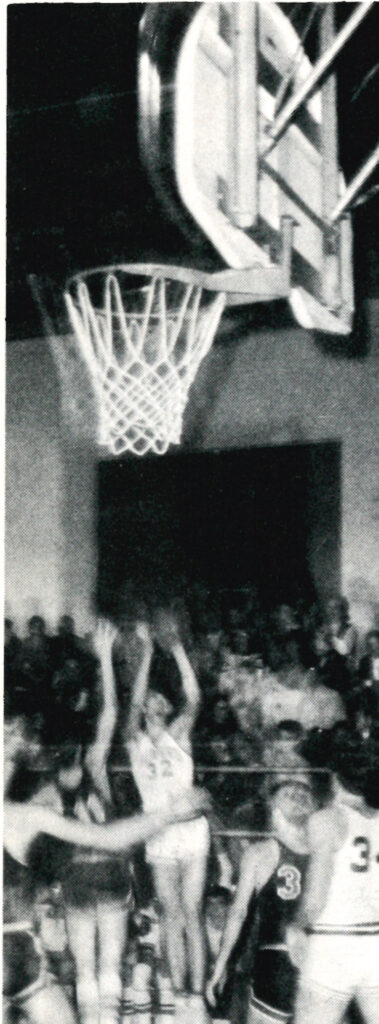
We circled our coach, our heads bent forward so that we could better hear him amidst all the rancorous noise, as he gave us our final instructions. “After Ed hits the shots, challenge the inbound pass and trap anyone trying to dribble down court, but DO NOT foul. Mills, stand at their free throw line and knock away any long passes.”
I for one was pleased I would be stationed away from the action, with little or no possibility of screwing up, ready with my long arms to knock any attempted passes into the bleachers. It would not exactly be like making a game winning shot, but at least it would be a final exclamation mark on a hard fought and exciting win.
We put our hands together and then broke from the huddle. Five seconds would surely pass in the blink of an eye.
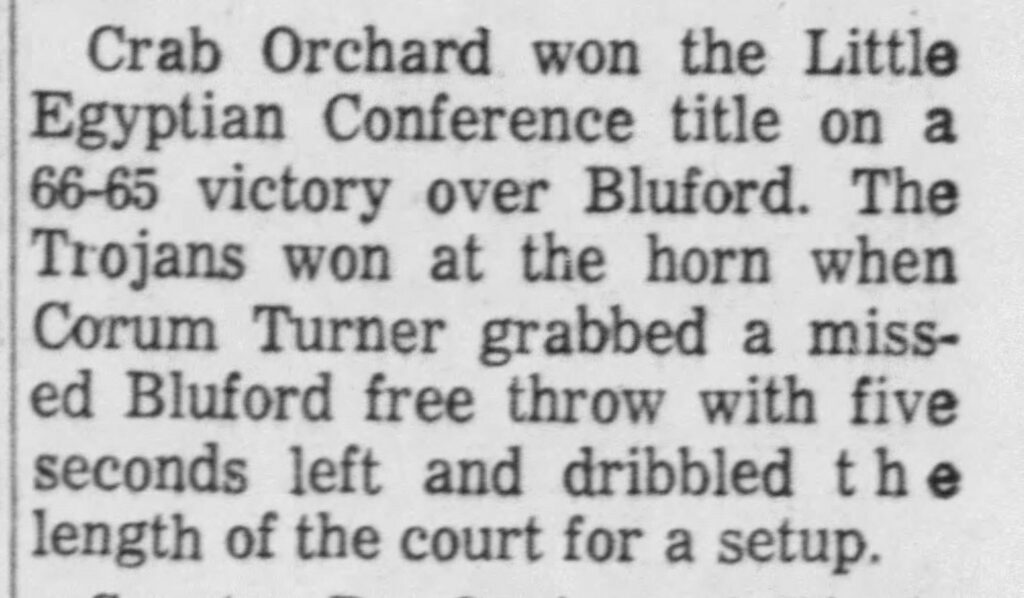
Ed missed his first shot and Corum Turner grabbed the rebound. He weaved and sprinted through our entire defense, moving like a bolt of lightning in my direction, there where I stood in front of their basket.
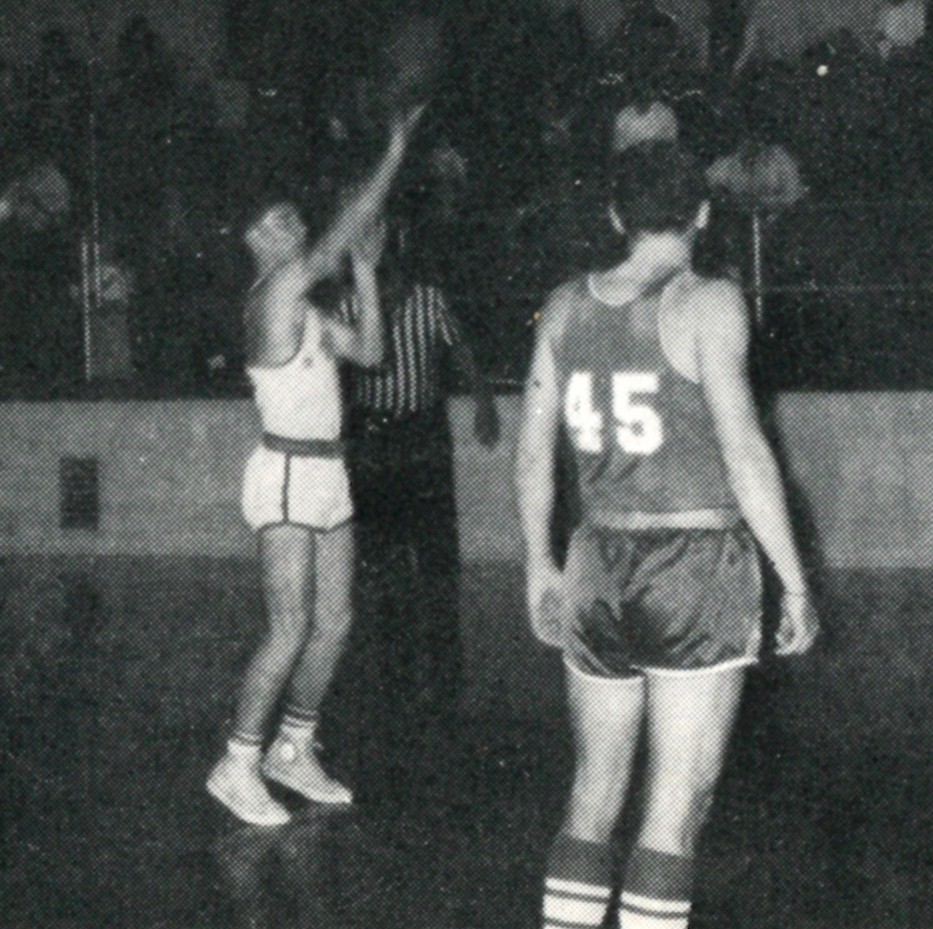
Out of the corner of my eye, I thought I caught a glimpse of my dad, standing up on his tiptoes and both arms up in the air, as if he could help me swat the ball away when Turner pulled up to shoot.
Everything went into slow motion, with me wondering why the horn to end the game had not sounded, and Coach screaming, “Don’t foul, Mills! Don’t foul, Mills!”
Coach Yates did not have to worry. I was determined not to be the goat of the game, not to be the one to put this basket making machine of a player at the foul line with no time left on the clock.
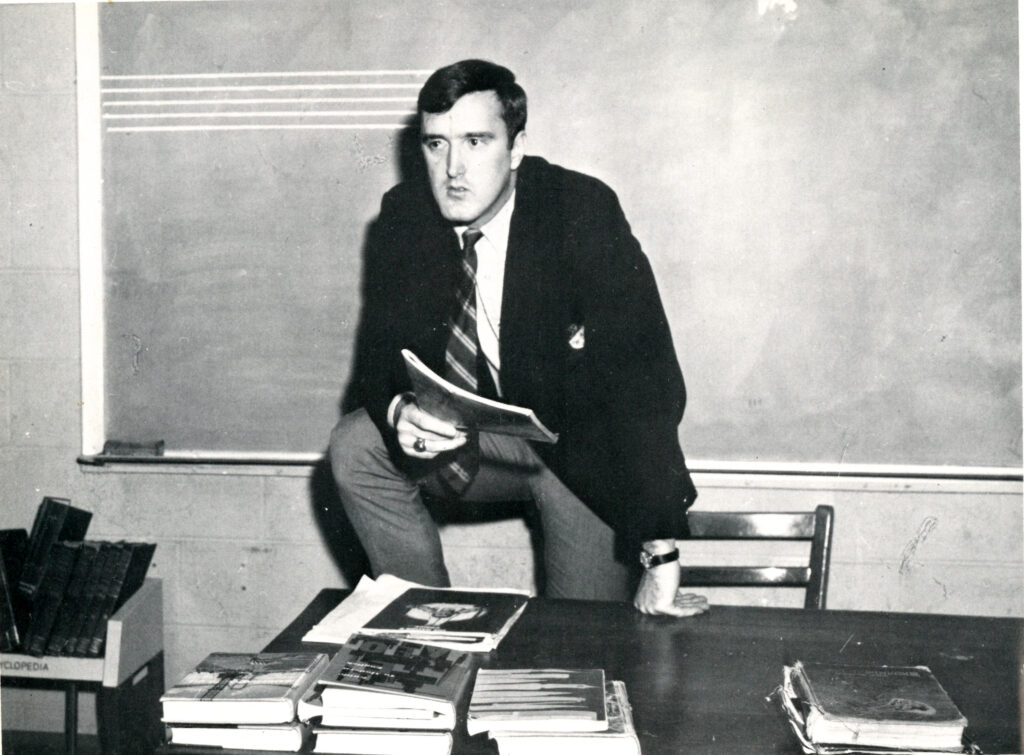
Corum Turner charged almost up to me. With only one good eye, it seemed he with giving me a demonic wink. I stood my ground, both arms up in the air my knees bent, ready to spring. Turner stopped, jumped straight up and tossed in the gentlest little jump shot I ever saw.
The ball was in a perfect rotation in the air when the horn sounded. At least I did not foul him.
After the game, Coach hardly mentioned anything about the final shot, the basket that broke the hearts of all the Bluford fans. He just sat with his shoulders slumped forward, resting in a folding chair in the deadly quiet dressing room, holding the scorebook. He glanced up at me as I left and without any malice said, “I was just waiting for you to cram that ball down Corum Turner’s throat.” Then coach turned back to the scorebook, as if he hoped to find a mistake that would win us back the ball game.