He may be the greatest baseball player you’ve never heard of- Oakland City Indiana’s Baseball Hall of Famer, Edd Roush. He wielded the heaviest bat ever used in professional baseball and was a fierce competitor, leading the National League in batting twice and coming in second another, losing the title that season by a hair because he missed the last few games after his father died in a lineman accident back in Oakland City. Although he could sock the ball for home runs, he was primarily a slap-hitter, poking the ball to all fields, learning to do so during his first few years in the majores during the “dead ball” era, constantly moving around in the batter’s box to better spread out his hits into the field. “Place hitting is in a sense glorified bunting,” Roush once noted. “I only take a half swing at the ball, and the weight of the bat rather than my swing is what drives it.”
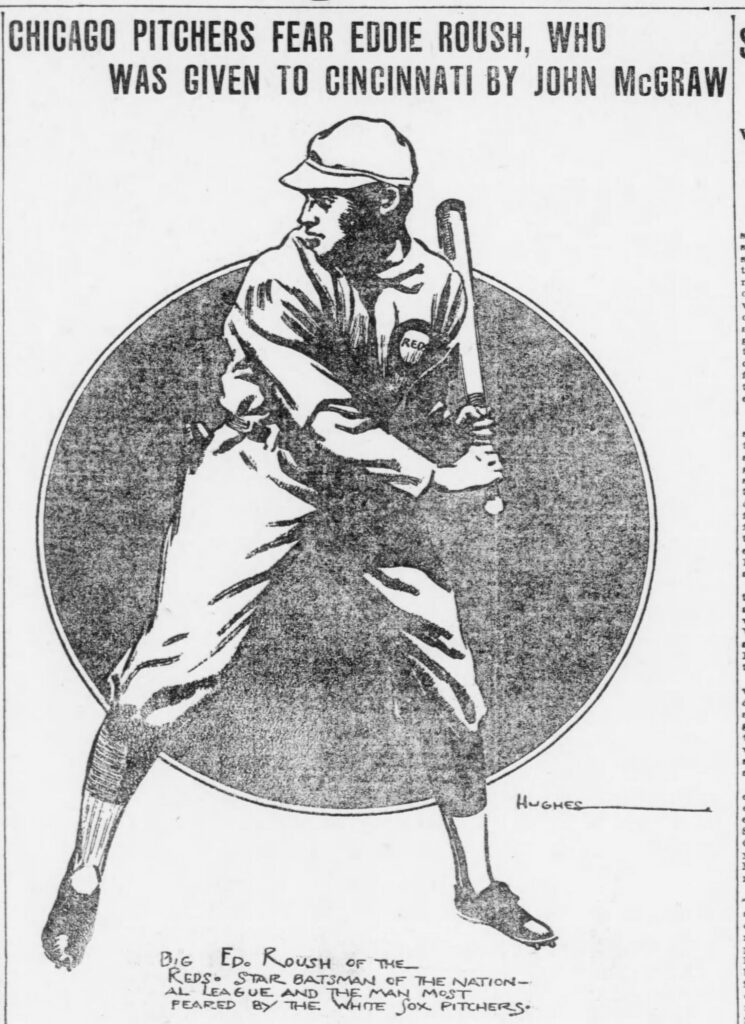
The great pitcher, Grover Alenander, revealed in 1927 that Roush was his toughest batting challenge. “The first thing I do when my batter is set is to watch his feet. When he starts to digging that rear foot deep into the ground, he’s getting a toe hole. He is getting ready to burst one. He gets a slow curve. Roush does not set himself at any time. He scrapes and jockeys around. He balances on his toes and shifts his feet and keeps the pitcher up in the air. The pitcher doesn’t know if it’s a bunt or a full swing.”
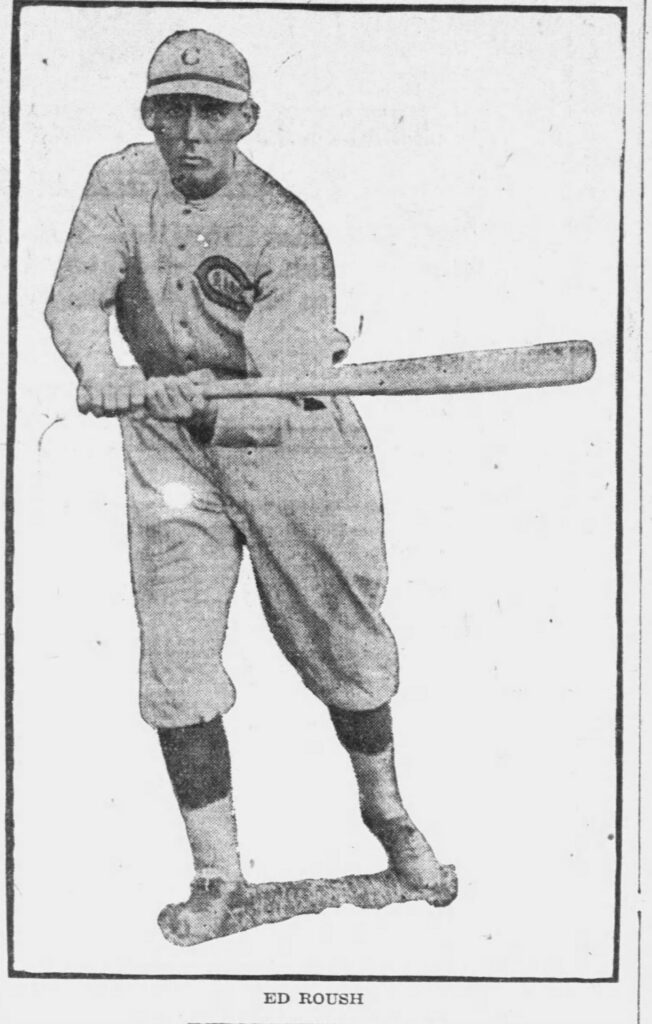
Fielding was probably Roush’s greatest baseball skill back in the day of the small, thin, pancake baseball gloves. One sportswriter noted of Edd, “He was a remarkable fielder, his only weakness being ground balls. He specialized in circus catches, and the memory of Edd tearing across the outfield to snare hits that were tagged doubles or triples is one of the proudest recollections of Red fans.” Roush was a fantastic sprinter and possessed the ability to turn his back on the baseball and run to the exact spot where it would land.
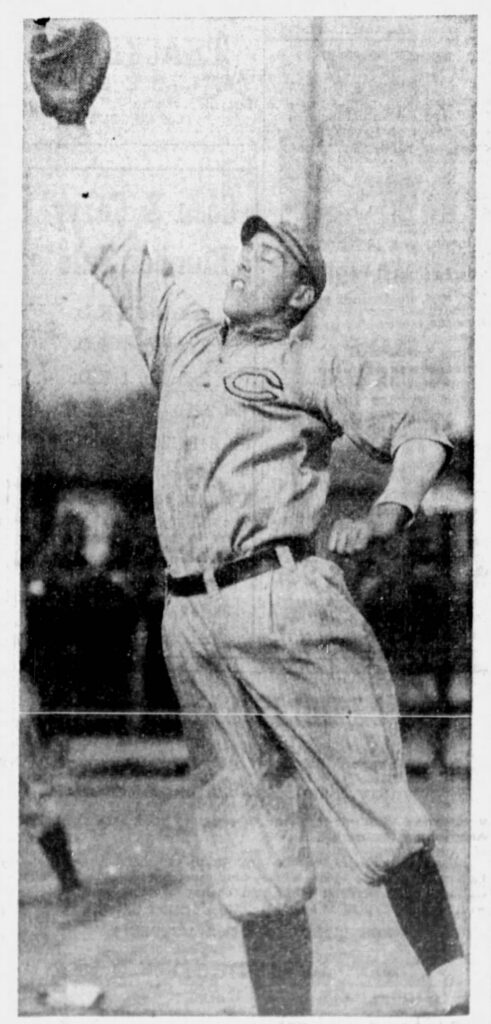
A San Francisco newspaper reported in 1924 how Roush made the greatest professional baseball catch ever seen up until that time. Edd was in the outfield when a hard-hit ball rose and went over Roush’s head. “Roush pinwheeled and revolved. He seemed falling over on his side. He thrust up the gloved hand and there the ball remained.”
By the mid 1920s, Ed Roush was considered to be in the very top tier of the baseball greats of that era. His ongoing determination to earn a fair wage, however, would eventually limit his future statues as a baseball standout. That national status apparently did not matter much. One sportswriter explained in the Brooklyn Eagle in 1924, “Roush was born in Oakland City. Always lived there. Always will live there. Married an Oakland City Girl.”
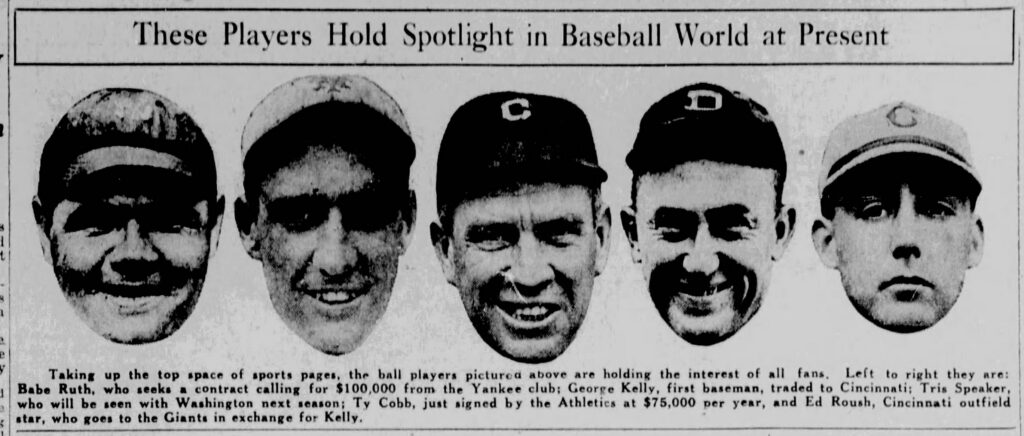
Edd Roush’s journey to greatness was not always easy, but it was an odyssey that took him through the amazing and colorful landscape of independent, semi-pro, minor, and professional baseball leagues of that era, a time when the game first blossomed into its fullness.
_______________
I came to know Edd Roush from a distance long after his professional baseball journey had ended. I was a freshman at Oakland City College in the fall of 1969. Edd would have been seventy-six years old then, but he still looked jaunty, trim, and spray as he made his daily walk from his neat little bungalow house on a narrow lot on Main Street down to Hoot’s tavern and back.
He was still mowing his yard with a push mower.
I was too much in awe to talk to him, and he did not look like anyone you would want to mess with. As it turned out, I had been correct about the latter thinking. Many years later, working on this story, I would could across a 1925 Brooklyn Eagle newspaper account in which a sportswriter called the then thirty-two-year-old Roush, “an intense person, the stubborn, fearless type.”
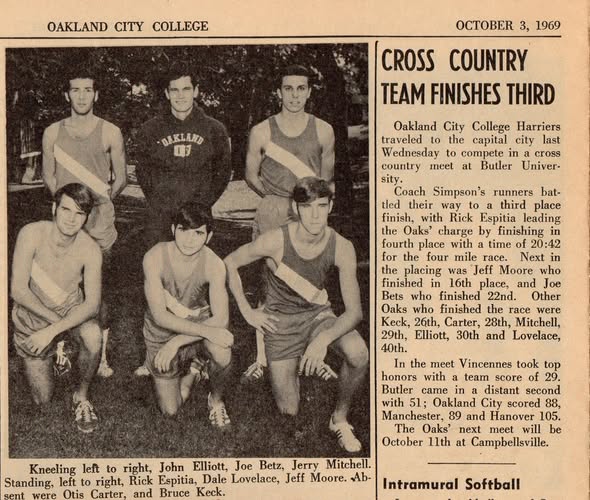
One of my Jordan Hall dorm mates, Joe Betz, who ran for the college cross country team, did get to know Rouch in the late 1960s and recently told me this story.
“I was running by his place once and saw him trying to fix his gate around his picket fence. I stopped and helped him, and he invited me back for a beer. His house was about the size of a two-car garage. I told him if he needed anything that I was just down the street. We became beers drinking friends. He had all of his memorabilia on shelves. At the time I was too young for it to mean anything to me. He was just an old guy to me who needed some help and who occasionally needed someone to talk to.”
While in college, I had heard from a local that Edd at some point stopped drinking the city’s water, that he drank only beer, fearing the local water supply might not be very clean. When I asked Joe about it, he told me, “Well. That man could drink.”
Several years later I came back to Oakland City to teach at the college. I began learning more about Edd Roush’s story, of his amazing career in baseball and what went on before and after his times in the major league. At first this information came by accident, as I came across an article here and there about Roush while researching some other history topics. Then I befriended local historian and lawyer Bill Marshall who had played for Roush when the former baseball great coached Marshall’s Junior Legion team in the late 1940s.
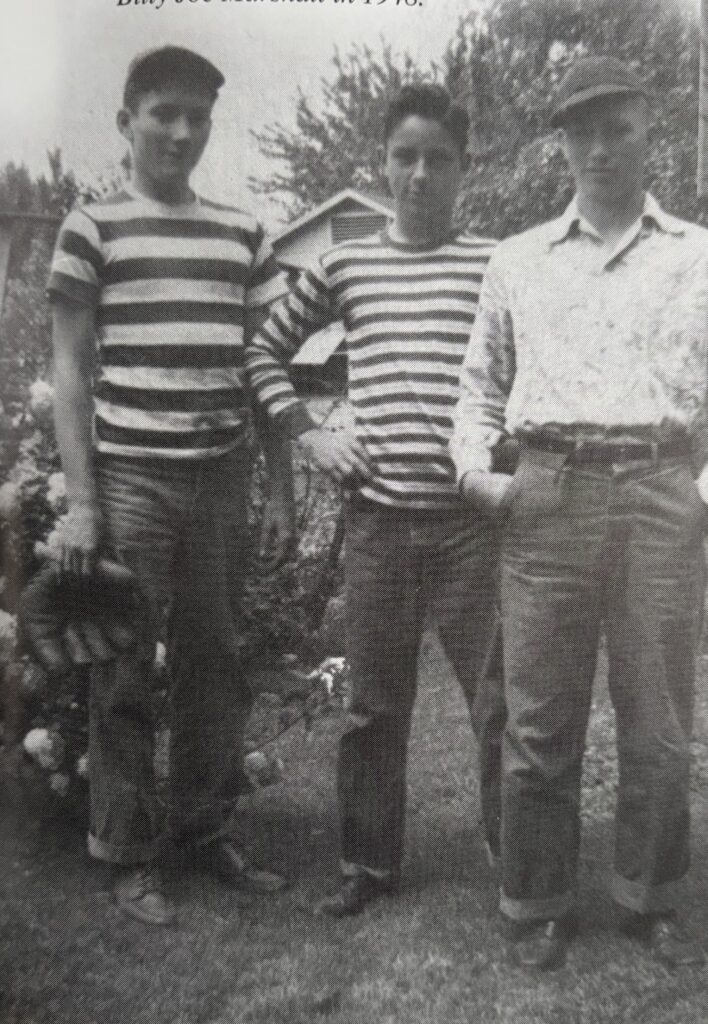
Edd, and his fraternal twin, Fred, were an energetic hand full, according to Bill Marshall who had heard many stories about the two brothers went they were younger. They were farm boys and very competitive, often rough housing and fighting on their way back and forth to school. Their dad, William, was a hard-working dairyman with a small herd of Holsteins. He also took other jobs to supplement the Roush household, including managing the local telephone company, a job that sometimes sent him climbing high up a pole, doing dangerous lineman work.
The twins’ mother, Laura, was a strong and capable wife, home keeper, and mother.
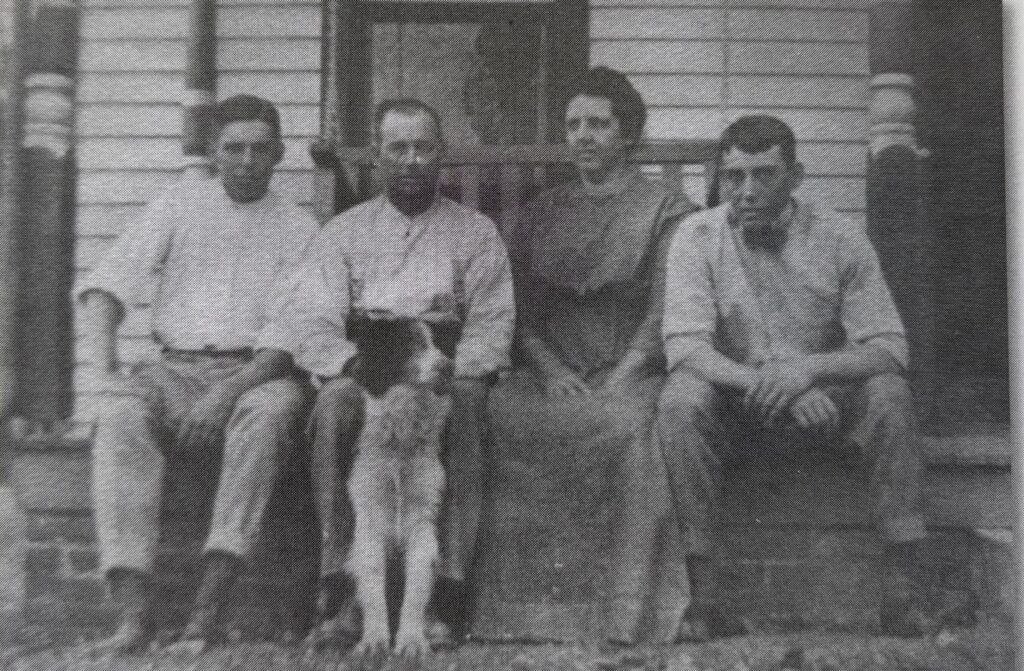
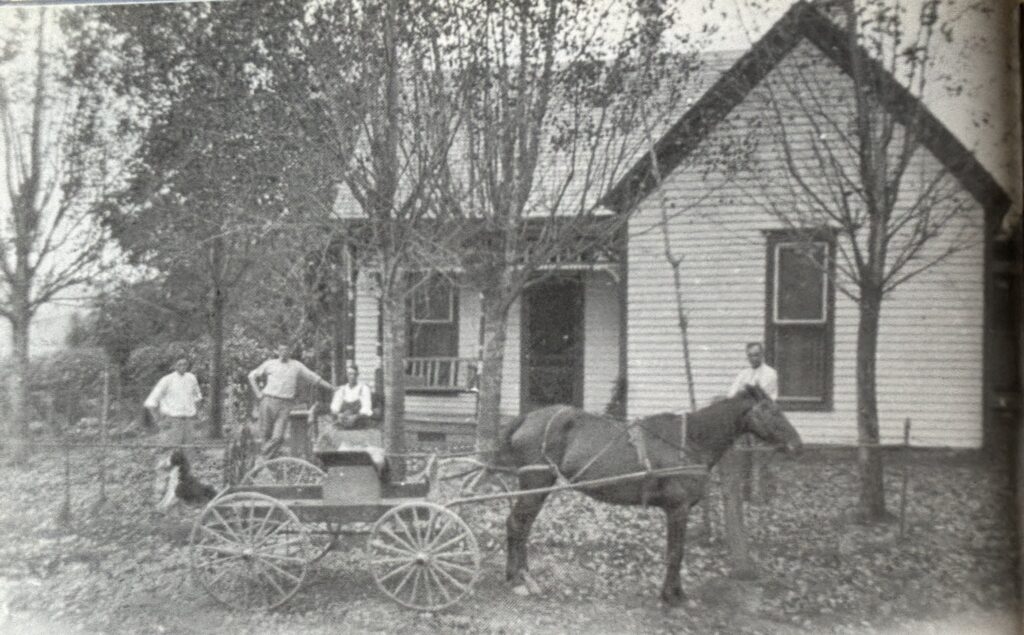
Mitchell Stinson, in his biography of Edd Roush, tells how working on the farm toughened the Roush boys. Dairy farming was difficult and time consuming, the sad eyed Holstein cows having to be milked twice a day. “Milk delivery provided a full-body workout,” as well. The brothers had to wrestle and load large, heavy milk filled cans to take into Oakland City by horse and buggy on their way to school, leaving the horse at the unloading dock to trot back home where their dad waited. But there was more to life than just hard farm work.
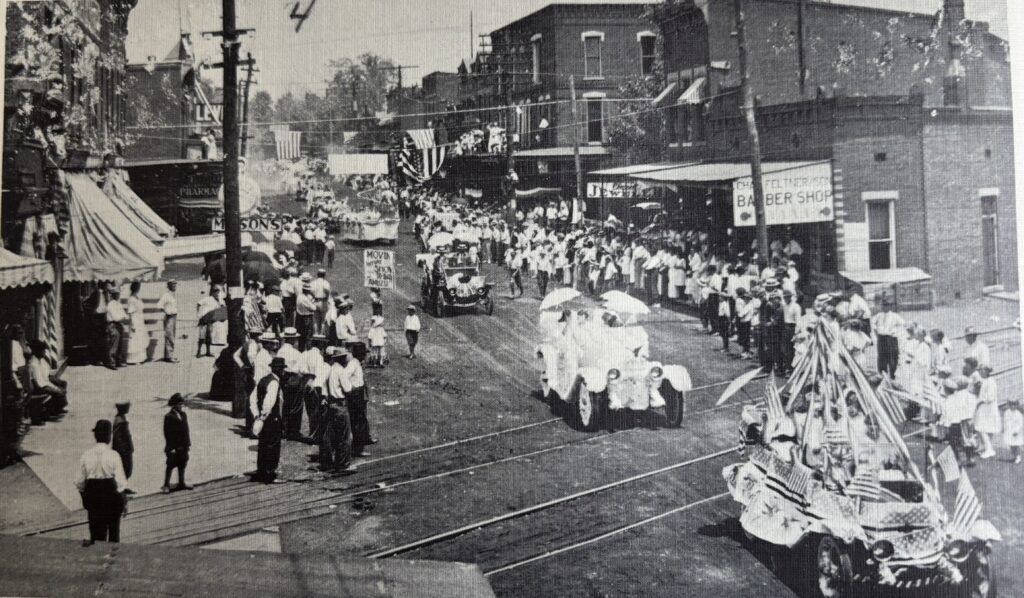
Baseball became the center of Edd Roush’s life at a young age. Edd’s father had played semi-pro baseball, and William Roush started his sons out early. Fred Roush explained to an Oakland City Journal writer in 1982 how William Roush bought his twin sons a baseball grove each, “so we’d stop smoking and jumping trains.”
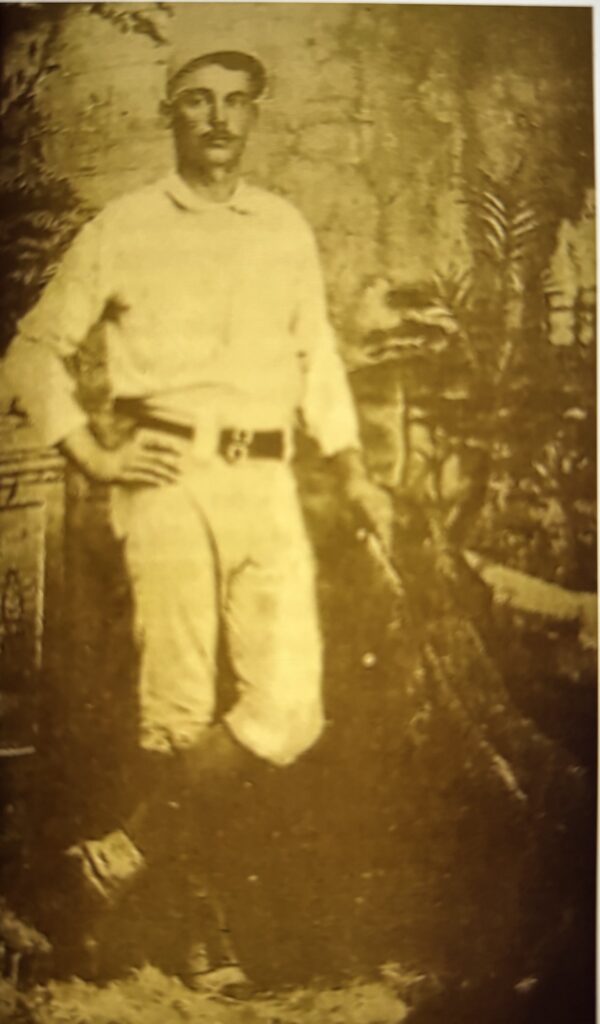
Edd was left-handed so he learned to use his right-hand playing baseball, according to Fred. The Roush home was a few miles east of Oakland City and “kids from town would come over and we’d play ball.” Even after Edd retired from professional play, he still wanted to be around the game, working with the youth in Oakland City, that is until an event occurred that soured him on doing so.
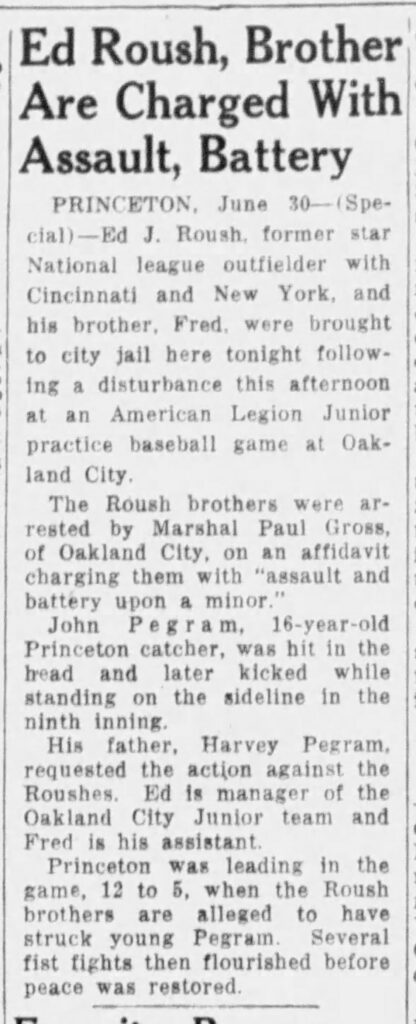
Bill Marshall remembered that turning point. It was in the summer of 1949. Oakland City was playing their archrival, Princeton, in a practice junior legion game when an Oakland City runner came blasting over home plate, slamming into the Princeton catcher.
The Princeton coach was the catcher’s dad. He stormed out onto the field, and confronted Edd Roush, accusing him of teaching his players dirty tactics. Meanwhile, Fred Roush began fighting with the juvenile catcher, doing so to protect his brother, or so said one of many accounts. The Oakland City Marshall arrested Fred for assaulting a minor and both brothers were brought to jail. Later, after a tense trial, Fred paid a light fine for his actions. “Edd,” recalled Bill Marshall, “never got over not receiving more local support and for having to go to jail. He never helped the local youth teams after that event and became very critical in public for the rest of his life about what he considered to be the poor baseball playing skills of the youngsters and the pros.”
Late in his life, Roush would make one last and very interesting gesture for the youth of Oakland City.
__________________
Athletic greatness in the Oakland City environment unfolded slowly for young Edd Roush. The small town of just over two thousand folks included a private college founded by the General Baptist denomination. Although the school had a seminary, it also offered degrees in business and teacher education, among other secular degrees and was the leading school for teacher training in the area.
The president of the school, William Dearing, was not one to put up with students who attended OCC for reasons other than serious study. And with its small enrollment, it was easy for Dearing to spot maleficence. In one report to the general public, he bragged how the student body was committed to scholarship and none of the students, “smoke here. If they do, they don’t smoke long.”
Edd Roush liked a good cigar and was not prone to scholarship. But he did want to play basketball on a competitive level.
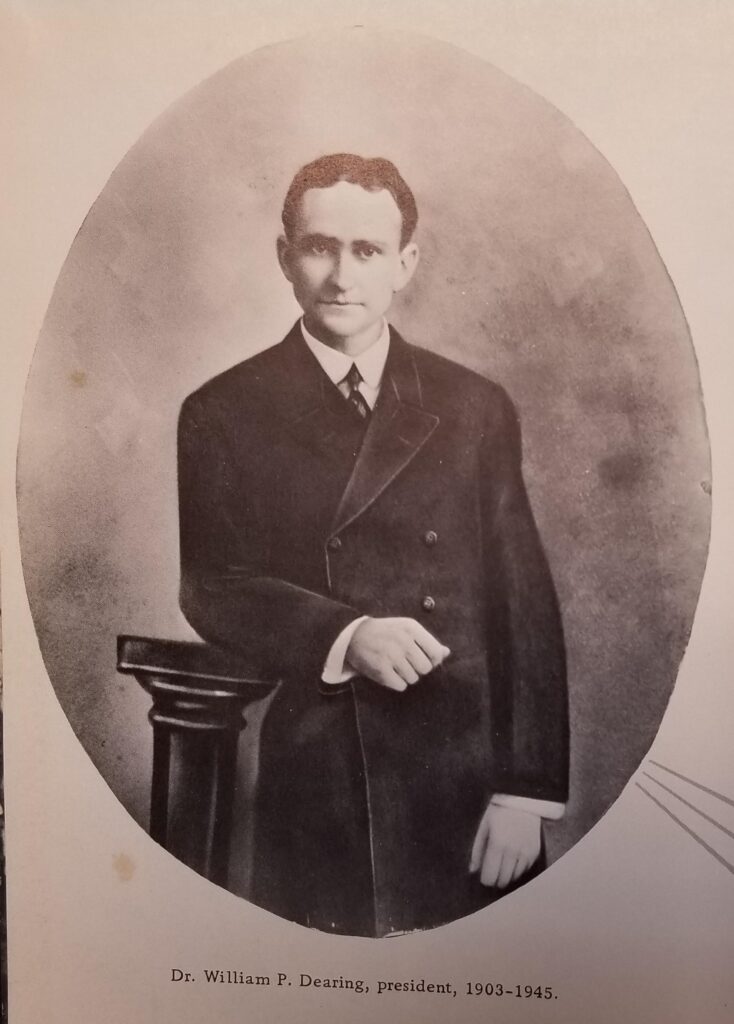
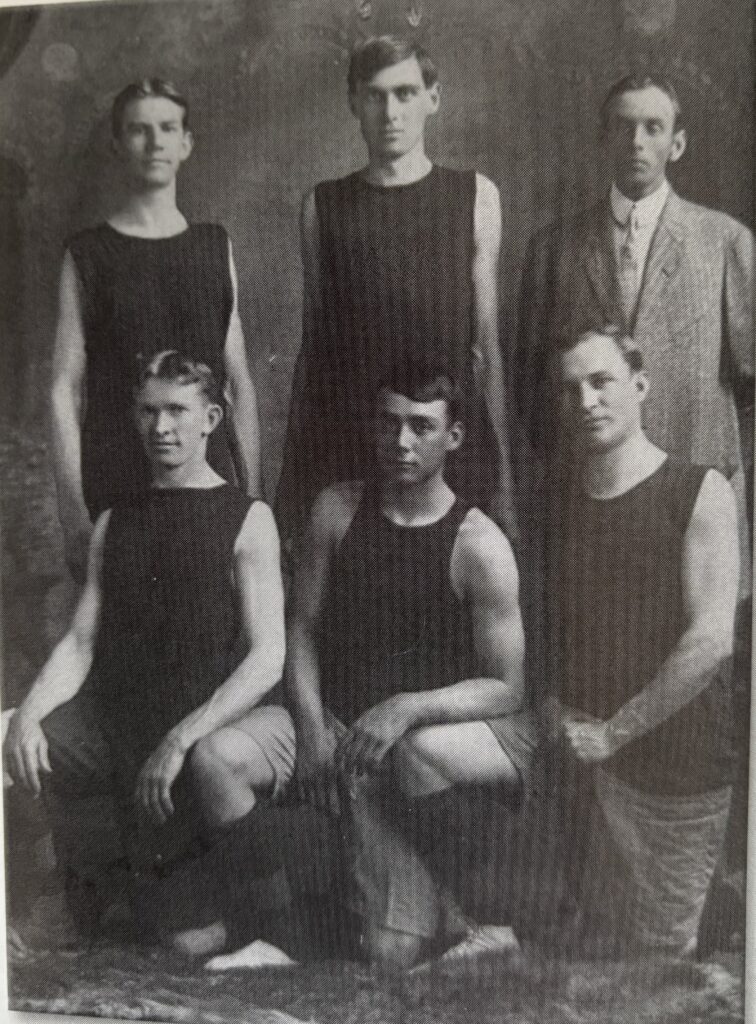
Although there are no official records of Edd Roush having attended Oakland City College, Edd’s can be found in an early before season 1911 basketball team picture, the photo suggesting he went there at least to participate in sports. President Dearing apparently put an end to that. Edd told an interviewer many years later that he tried to go to the college the next year to try and play on the basketball team again, but that Dr. Dearing cornered him one day and told him he did not think Roush was any more interested in being a student than the year before.
Soon, however, Edd would have plenty of sports excitement on his plate.
Rural areas of America were hotbeds for baseball. In southwest Indiana you can find newspaper reports of teams traveling and playing each other in the region as early as 1872. The Evansville Riverside baseball club, for example, was reported that year to be starting a tour by steamboat to play against Keokuk, Quincy, and St. Louis. By the early 1900s, almost every tiny town and village in southwest Indiana had an amateur team, including Oakland City. The three major newspapers in the region, The Evansville Press, Evansville Courier and Evansville Journal, all carried box scores and narratives about these amateur contests as small-town players gave their all with little or no pay for bragging rights and local glory.
Big towns went big. Evansville, for example, joined the Central League, a minor league outfit in 1902, sponsoring a team named the Evas. To add to the excitement, in 1910, on the lowest rung of minor league play appeared the Kitty League, made up of teams from towns such as Vincennes, Paducah, Henderson, and Clarksville. Evansville would come on board next year.
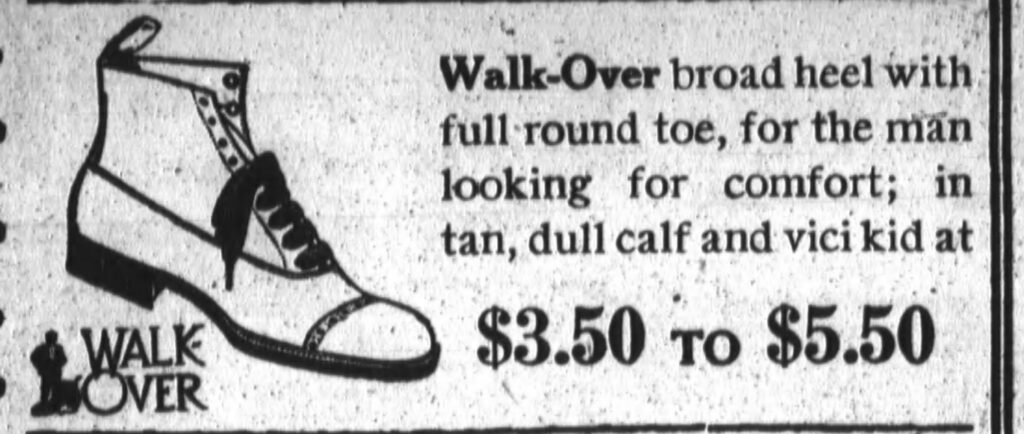
Edd Roush achieved his first baseball fame playing for the amateur Oakland City “Walk-Overs,” the team’s name coming from a shoe company that sponsored the squad. A few other area town teams used the Walk-Over name, including ones at Terre Haute, Vincennes, and Evansville.
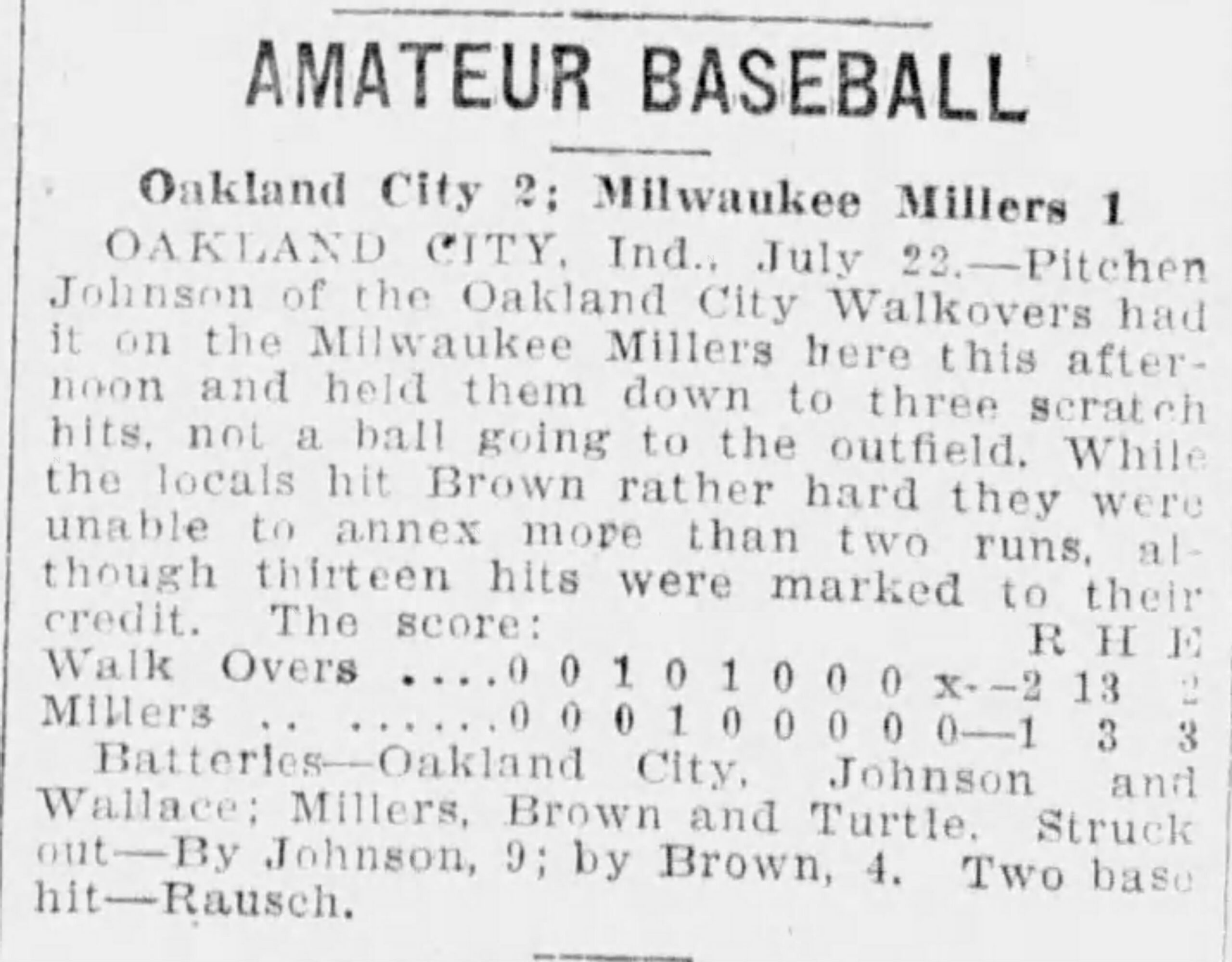
Young Roush was just 16 when he first began playing for the Oakland City squad in 1909. He only got a shot at joining when one of the team’s regular outfielders failed to show up. “We waited for five minutes,” Edd recalled, “and the outfielder never did show, so they gave me a uniform and put me in right field. Turned out I got a couple of hits that day and I became Oakland’s City’s regular right fielder for the rest of the season.” Roush would see his name for the first time in a big city sports page that year, a report in the Evansville Courier and Press noting his “two base hit.”
In the 1910 season, the Oakland City Walk-Overs dominated the region and gained the amateur crown after beating an Evansville team in the area championship. Roush’s name was frequently mentioned in local small-town presses and in the Evansville newspapers, one of the latter reporting Edd was “the feature of the game,” with his “two hard hit triples.”
The Walk-Overs’ most exciting contest that season was played in late August against another small-town neighbor, Owensville, a team they had spit with earlier in the season. The rubber match was eventually moved to Princeton to Coal Mine Park to accommodate the large crowd, the largest group of baseball fans up until that time in Princeton. Two special trains carried a large number Owensville and Oakland City fans to the contest. The Walk-Overs won, 6-5, Roush knocking in a key run.
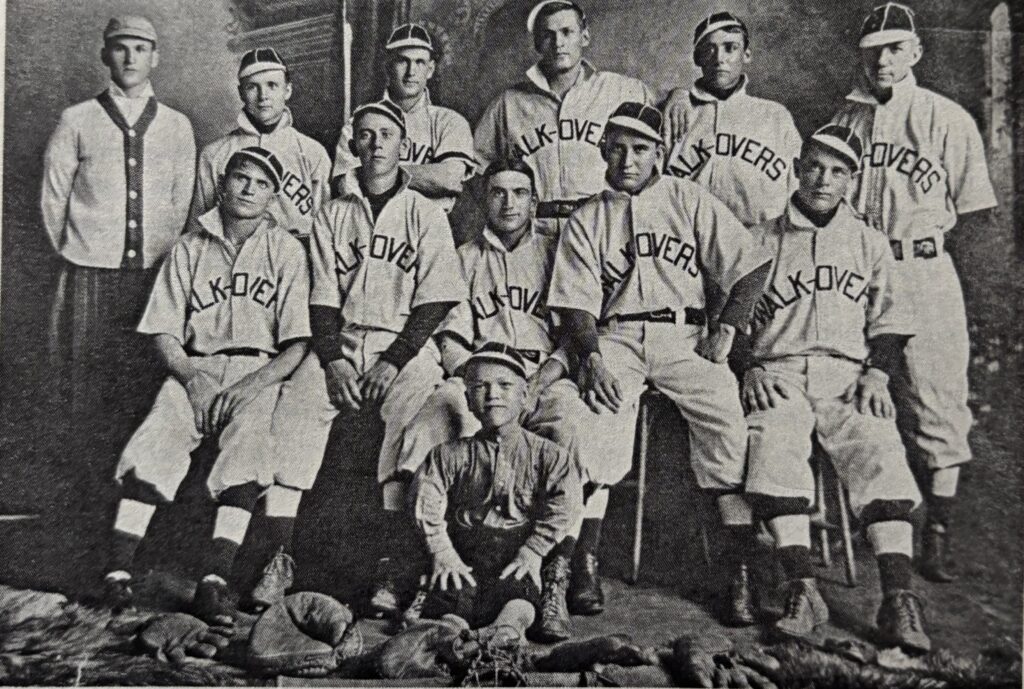
During this time, county seat Princeton was Oakland City’s most hated rival, the Walk-Overs and the Oakland City Journal gushing over any wins over the Princeton amateur team called the Rexalls, after the drug store that sponsored them. Games between the two teams often became heated, boiling over into fights. One contest had to be stopped and rescheduled, the next time with umps from both towns working the contest.
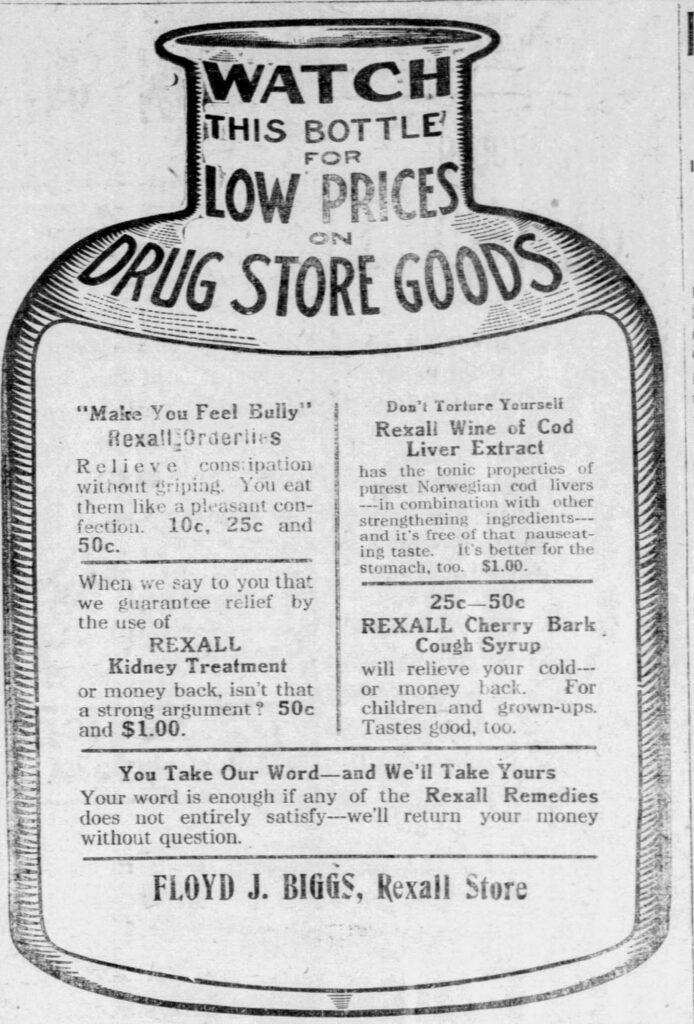
In 1911 the impossible happened. Edd Roush went over to the Princeton side, along with Walk-Overs pitcher, Pete Lowe. The Princeton Clarion crowed, “Roush has no peer in the amateur ranks of southern Indiana. He is a natural born ball player and was the prize of the Walk-Over team.”
As Rexall players, Roush and Lowe would lead their new team in a victory over their former Oakland City brothers. After the Oakland City loss, the local Oakland paper noted, “Princeton fans are gloating over a victory from the Walk-Overs like a small baby with a tinseled toy.” Roush, by the way, had an off day in that contest. He had a single base hit and three field errors. Edd later noted that many hard feelings were stirred by his switching sides. Money was the cause for the unexpected move. The Walk-Overs manager had paid Edd nothing while Princeton ponied up five bucks a game.
It was the first hint of how important being paid for his playing skills was for Edd Roush, even when it came to pleasing his beloved community.
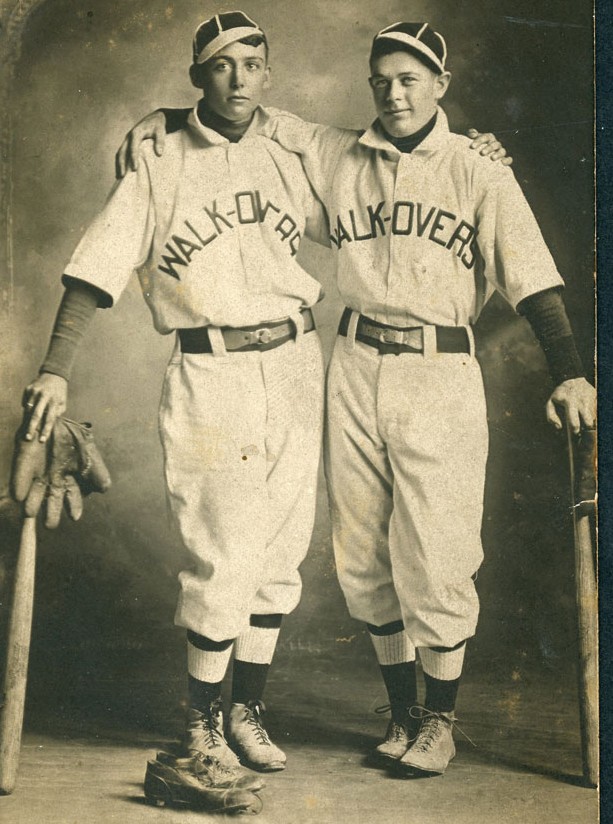
Low-level minor league teams were always on the lookout for promising independent and semi pro players and Roush soon began an up and down journey, often unsure where the trip was taking him.
In mid-August of 1911, Roush moved south, picked up by Henderson (Kentucky) Mud Hens to play at the lowest level of the minor leagues, the regional Kitty League. The Henderson Gleaner noted that Roush was “one of the best hitting infielders playing independent ball,” although the piece got his hometown wrong, saying he was from Muncie, Indiana.
Henderson paid Roush seventy dollars a month. Edd squeezed out another ten dollars in his contract when he signed. Ed wasn’t going to play the hard game of amateur or minor league baseball without fair compensation.
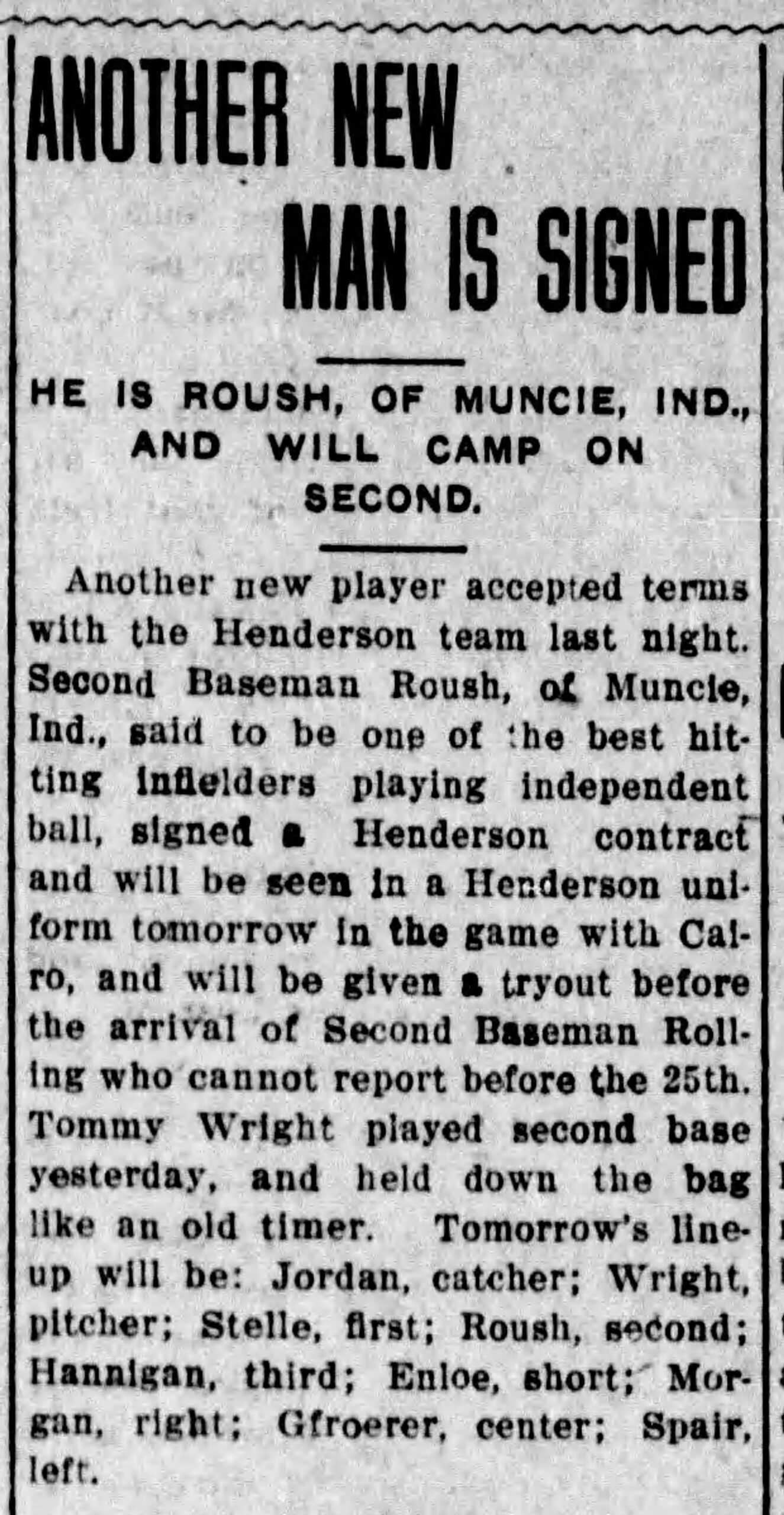
Roush had some solid games for the Hens. The former Walk-Over and Rexall player, now eighteen years of age, seemed to be on the verge of moving up in the baseball world. In late August of 1911, the Henderson Gleaner gushed over Roush’s play.
With Kenny disabled with a fractured digit, Roush was pulled from the outfield and packed the first sack. He put up a wonderful game. Twice his catches of hot ones saved scores. He leaped high into the air in the sixth and his glove hand pulled down Snyder’s drive which had a three-base tag on it. Those who took pain to watch Roush’s work wondered if there is a place besides the battery that he cannot play to perfection. He is undoubtedly the most likely man in the league.
In reality, Roush was often inconsistent while playing in Henderson, with several bad days at bat and “getting punk in his fielding.” The Henderson team let Edd go before the season ended. This may have the lowest point of Edd’s baseball journey, him having to go back down to the lowest rung of the baseball playing ladder.
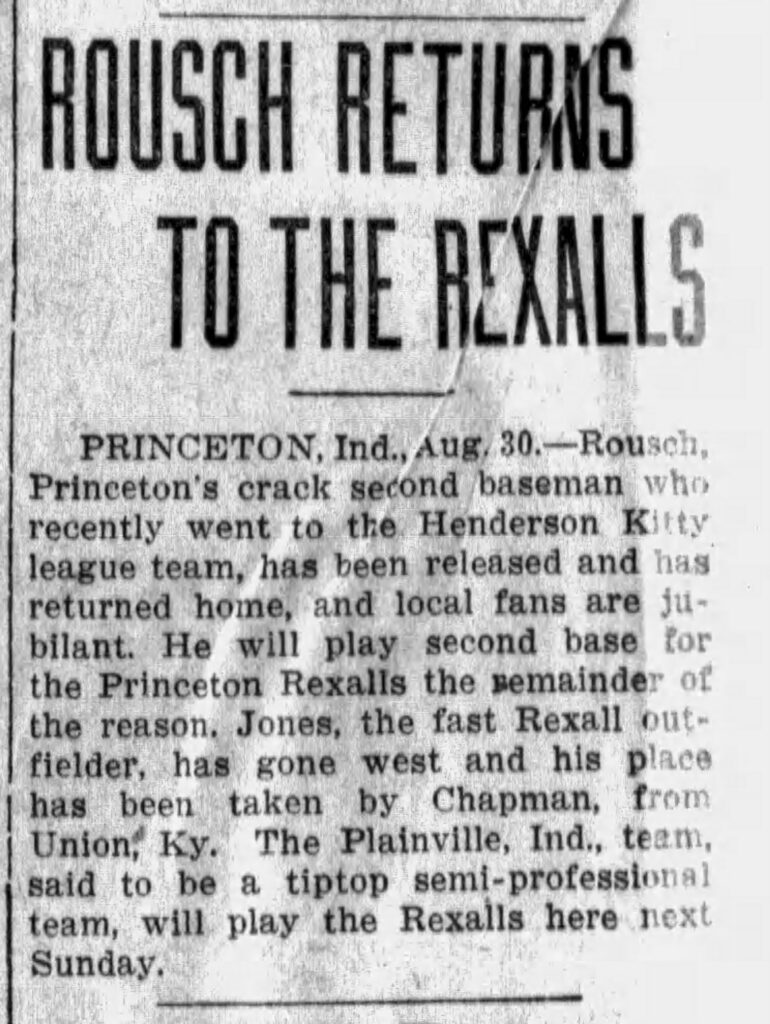
The Oakland City Walk-Overs invited him back, but Edd decided to rejoin the Princeton Rexalls the next year. The Princeton squad was moving up to the new Ohio Valley League and Roush would get paid more and probably receive more look sees from scouts. But the league folded rather quickly, sending the Rexalls and Edd back to playing independent baseball. The upside was Roush recovered his batting stroke and fielding magic during that time.
Fate intervened in 1912. The scrappy, young Oakland City man was invited to join another Kitty League outfit, the Evansville Yankees. Roush returned the favor of being called up to play for the Yankees by hitting a monstrous blast in his first game for his new team, “the longest drive ever made inside League Park,” accounting to one newspaper.
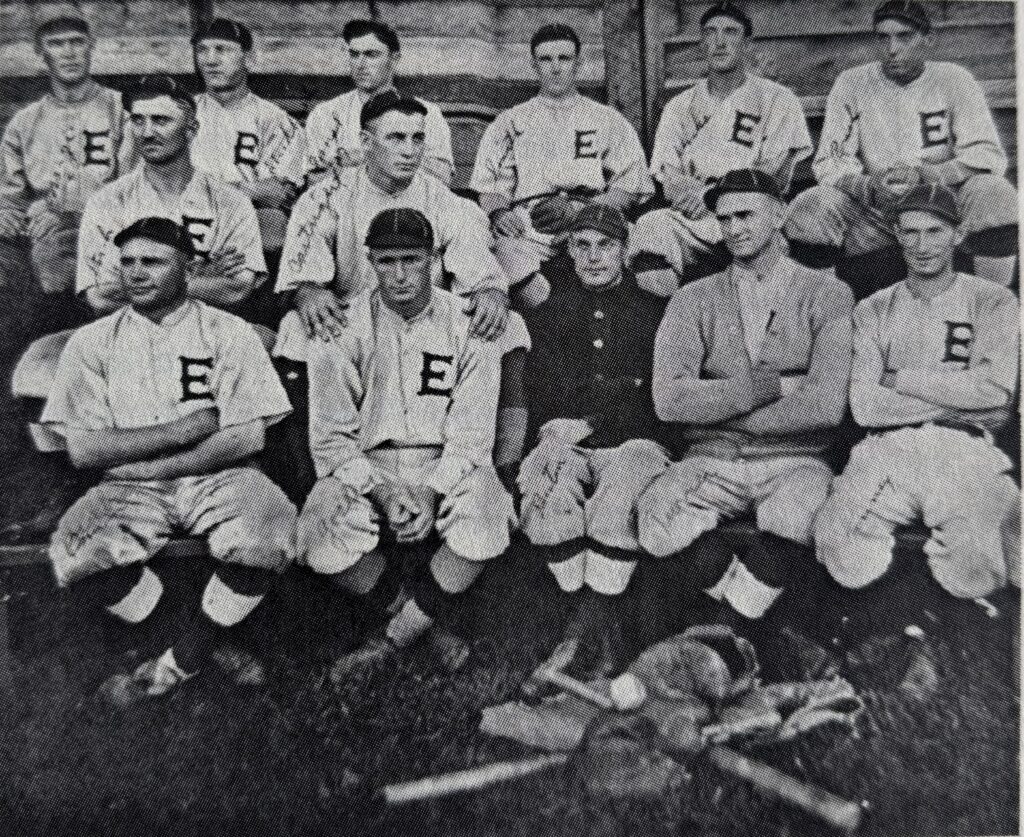
Edd Roush did well for the Evansville team that season, scattering hits all over the field and hitting the long ball too. His fielding was superb. He also began catching with his right hand and throwing with his left, the change giving more power to his throwing. It brought a mark improvement in his already strong play.
There at the bend in the Ohio River at Evansville, young Roush blossomed.
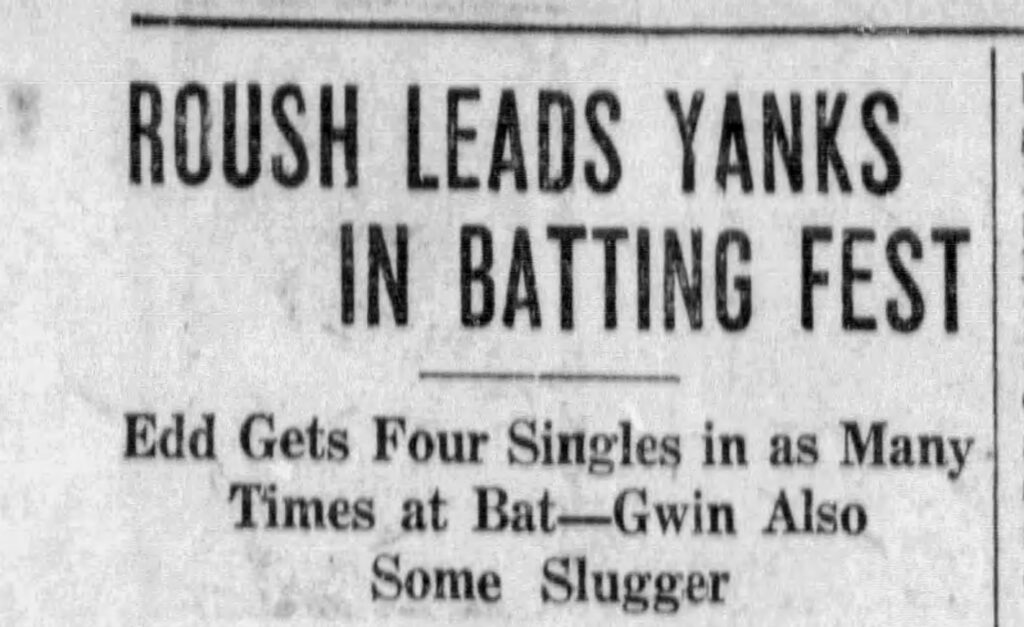
Perhaps the sweetest win that season was a game against his former baseball comrades, the Henderson Mud Hens. The day after the Evansville win, the local Henderson paper explained how “A tall, lank, slim youth that goes by Rausch, a Henderson (Hens) castoff, released from the Kitty club last year because of a failure to deliver the good, ‘came back’ with a vengeance Tuesday, and provided the undoing of his former teammates.”
The final feat for Edd that day was slashing a hit to the far center field, sending in the winning run.
The Henderson newspaper couldn’t stop saying enough about the Roush’s turnaround, noting a few days later under Kitty League Gossip, (misspelling his name as Rausch again and giving the wrong hometown) “Expert critics in the league circuit are touting Rausch as a major league product and declare it is only a matter of short time before the Princeton lad craves his name in the halls of baseball history.”
Even with the misspelled name and wrong hometown, the piece was surely music to Edd’s ears.
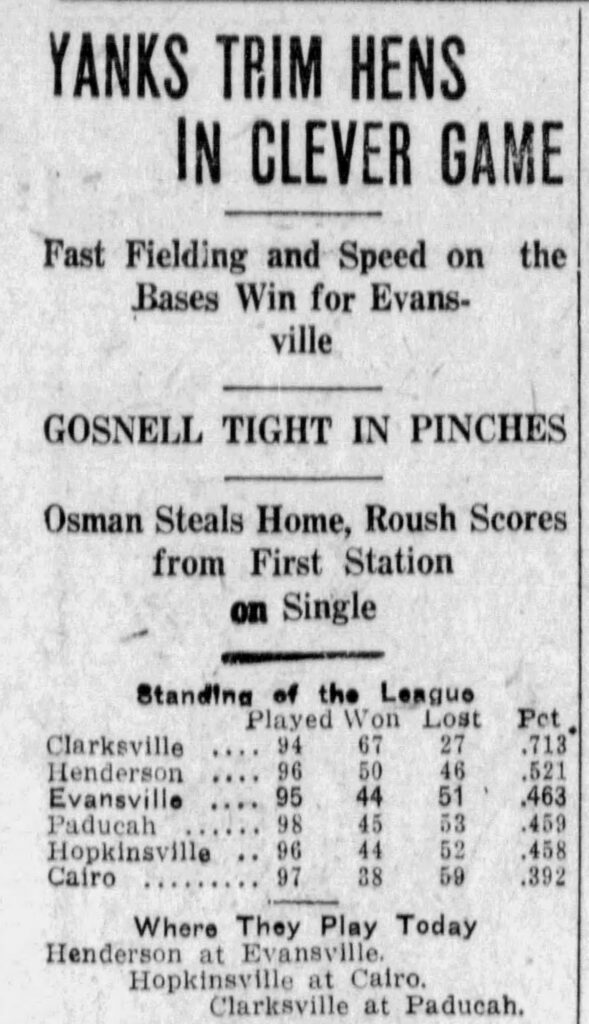
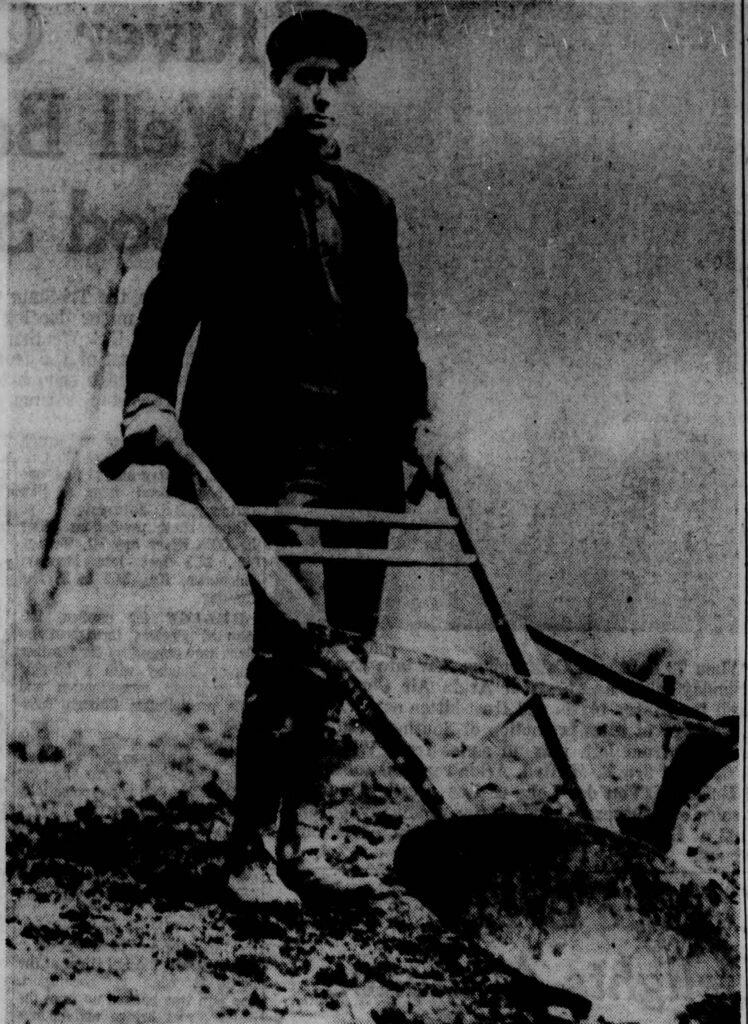
Evansville ended up being the perfect spot for a country boy like Edd Rousch. The town was not too big, and Oakland City was close enough so that Edd would be able to frequently fish and hunt and continue to work with his family on the farm. The 1912 season ended with Edd gaining solid numbers in hitting and doing even better in the field. But changes were coming.
_______________
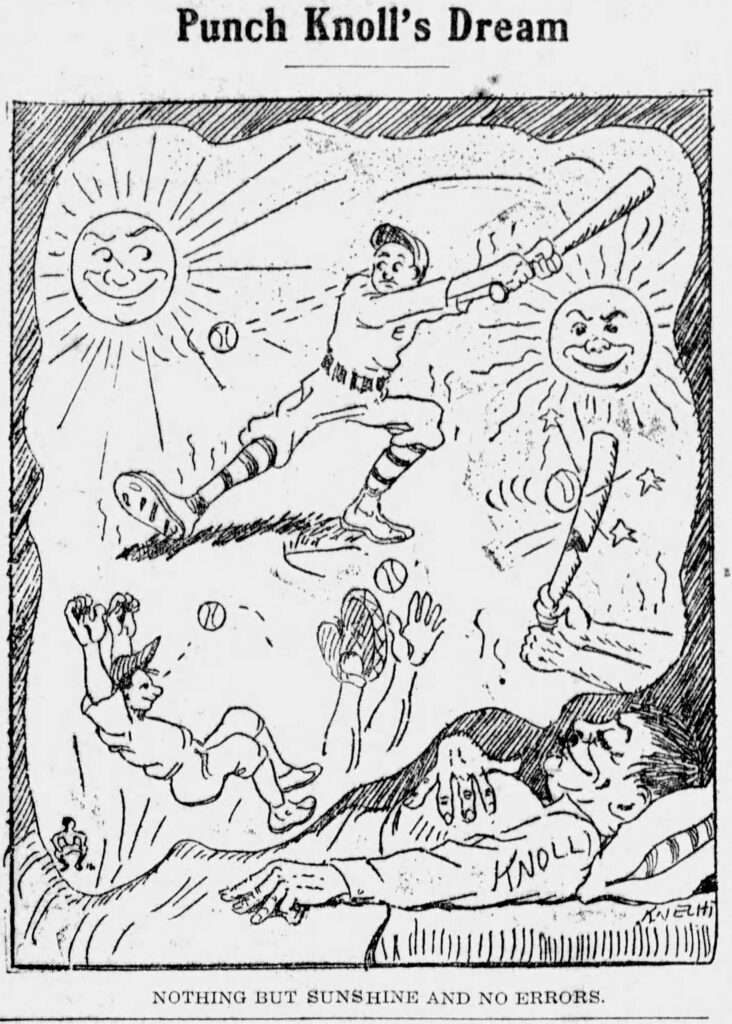
The next year, 1913, Evansville moved up to the Central League and were called the Punchers, after their manager, Punch Knoll. Punch, an Evansville native, was a legend in the city, someone who ate dreamed, and slept baseball. He played in several professional leagues in the region in the early 1900s and had a short ride with the Washington Senators. Returning to Evansville, he played an important role as a coach/manager/player in the early development of semi-pro and minor league baseball in the city. Knoll would bring Evansville its first pennant a few years before Roush came into the picture and his professional connections could only help young Edd Rouch from tiny Oakland City.
It did not take long. Early in the season, a scout for the New York Giants came to an Evansville game to look Rousch over. Edd did not disappoint, smacking a home run, a double, and a single in four times at bat. Roush was “hitting like a demon” that day, according to the Evansville Press. But it was the Chicago White Sox who finally paid him a princely sum to come aboard at the end of the Evansville Yankees’ season and gave him his first shot in the big leagues.
Roush made his first appearance for the Sox in Chicago in late August, playing underwhelmingly in a few contests before being packed off to Nebraska to get some time under his belt in the Western League with the Lincoln Antelopes. The region, however, lacked a baseball culture. There were poor crowds and difficult playing fields. Roush had trouble with the new environment. “The grounds were about as big as a cigar box,” Edd recalled, “and the grandstand was a row of circus seats with a canopy over it.” The Lincoln field was in irregular in shape, “a fence just behind third base.” When Edd was in the outfield, spectators sometimes joined him.
It wasn’t long before Roush decided he was through with baseball, “but then I thought I’d stick around a little longer.”
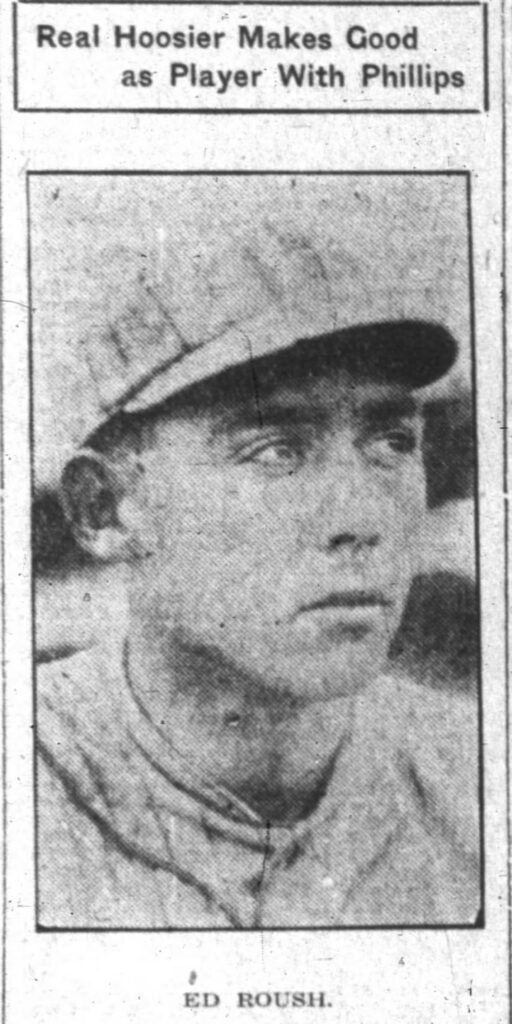
Edd’s fortitude paid off. The next year a new national baseball league started, one that hoped to rival the National and American Leagues. The name of this upstart group was the Federal League. Roush was quickly picked up by the Indiana Hoosiers, based in Indianapolis. Of course, good money came with the gig. An Indy newspaper reported his proud father, Bill, took Edd from Oakland City to Indianapolis up to sign a contract.
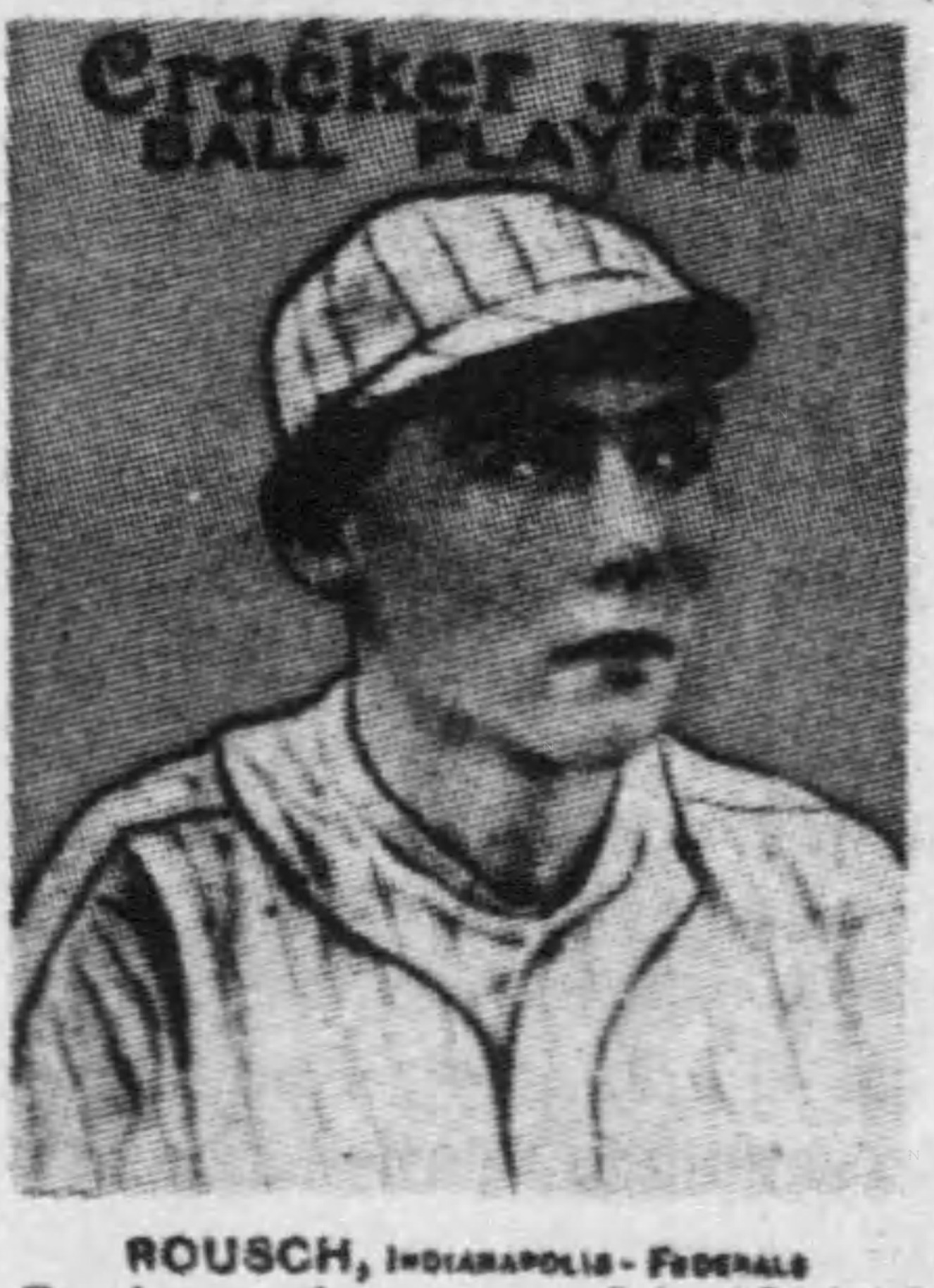
Young Roush was ready and was instantly liked. An Indianapolis sportswriter described the young nineteen-year-old Oakland City man as “the board shouldered; strong limbed athlete. He is keen of eye and has a free easy motion at bat. He is a hard hitter. Accuracy has marked the youngster’s fielding.” The writer added that the team’s owner, “is going to think a while before he lets him get away.”
Spring training took place in Wichita Falls, Texas and true to his ongoing pattern when it came to spring training, he got there a day late. Edd, who took pride in his year-round conditioning and weight control, was never a fan of spring training. Once the season began, teammates and coaches alike marveled at his base running and fielding speed. Roush was a natural sprinter, his blazing speed helping him zoom about in the field and run bases like a madman. At the end of the season, a stopwatch clocked Edd on a bunt run to first base. His run tied a world’s record. Specifically, an Indiana newspaper noted Roush tied a world’s record, “in running out a bunt to first base in three and one fifth seconds.”
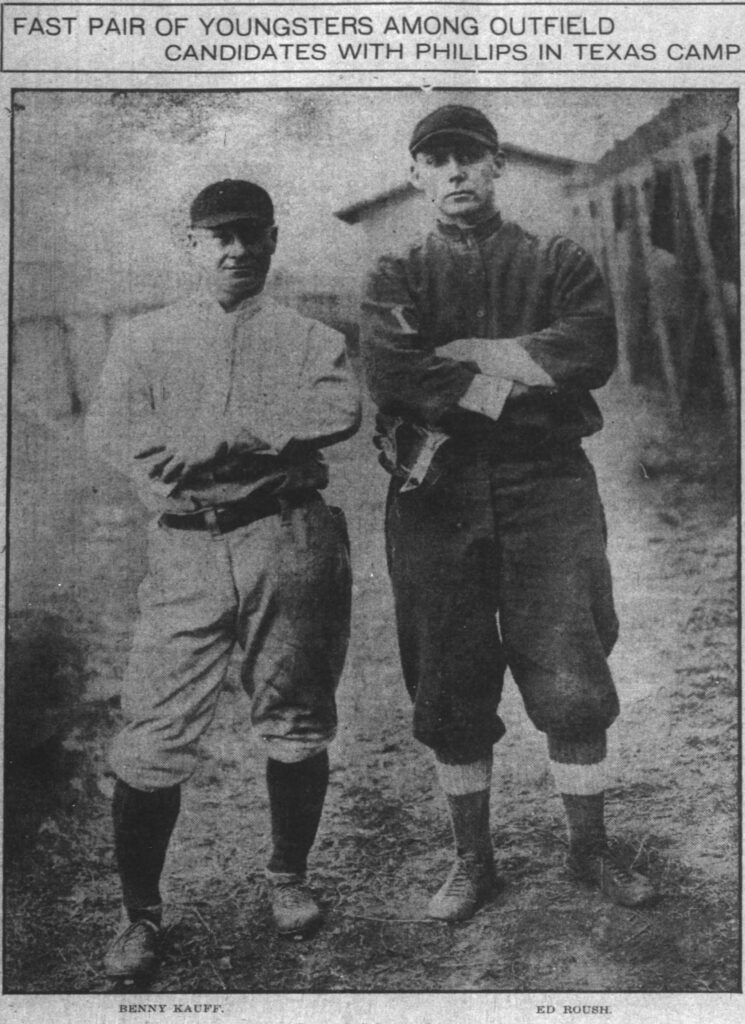
Perhaps the most important thing in Roush’s life occurred at the beginning of the playing season for the Indy team when he married an attractive Oakland City girl, Elsie Swallow. She would travel with Edd while he played for Indianapolis that summer.
Meanwhile, it took Edd much of the summer to reach the high level of play he was capable of, or, perhaps, he was just a distracted newlywed. A late season report in the Evansville Journal spoke to the young Oakland City man’s positive turning point.
Roush did not break into the game as a regular player until the start of the last swing around the eastern half of the Federal circuit, but his week during the last three weeks has been of the kind that has drawn attention. Always a hitter with more than ordinary ability, he has developed into a finished fielder, his work at the last two game in Pittsburgh being of particular merit. Roush had seven put outs in left field, three of which were labeled as thrilling catches.
Indy/photo of plow